Estate sale companies charge a commission on what the sale brings in, typically 30% to 50% of gross proceeds. Most take it from the proceeds rather than charging upfront, though some contracts set a minimum or extra fees. Smaller estates usually pay a higher percentage, and cleanout is often billed on top, so get the full terms in writing.
What the commission actually covers
The percentage pays for a lot of work. A company sorts the house, researches and prices what is worth pricing, photographs and advertises the sale, staffs it, handles buyers and money, and produces a settlement statement afterwards.
Some companies use a sliding scale, so the percentage falls as the sale gets larger. Estate Pros publishes this example of how one might look:
| Gross sale | Example commission |
|---|---|
| $5,000–$10,000 | 50% |
| $10,001–$15,000 | 45% |
| $15,001–$20,000 | 40% |
| $20,001–$30,000 | 35% |
| Over $30,000 | 30% |
This is one company’s example, not an average or a quote. Other companies set a rate after seeing the house. Each company sets its own terms, so ask for yours in writing.
Why smaller estates pay more
A sale takes roughly the same number of days whether it grosses $8,000 or $30,000. The setup, pricing and staffing barely change. A higher percentage on a small estate covers that fixed cost.
What is usually extra
Ask about these before signing.
- Cleanout after the sale. Sometimes included, often billed separately, occasionally handled by donation with the receipt passed to you.
- Advertising. Usually inside the commission, but confirm it.
- Disposal. Hauling unsold items to a landfill costs money and is rarely free.
- Minimum fee. Some companies will not take a job below a set expected gross, so ask whether a minimum applies.
Sales tax at a Texas estate sale
Texas exempts what it calls an occasional sale. Broadly, that means an individual selling one or two taxable items in a twelve-month period, or personal-use items totaling $3,000 or less in a calendar year.
A company-run sale usually falls outside that exemption. The Comptroller’s rule on occasional sales excludes sales made through an auctioneer, broker or factor, and a company selling your belongings on commission is selling them on your behalf. That is the usual reason a company-run sale charges buyers sales tax.
The Comptroller does not name estate sale companies in its guidance, so ask the company how it handles sales tax before you sign. The tax comes out of the buyer’s pocket, not your proceeds. If you are running the sale yourself, see how to run your own estate sale in Texas.
This is general information, not tax advice.
What to settle before you sign
- The commission, and whether it slides with gross.
- Whether cleanout is included, charged, or donated.
- What happens to unsold items, and who decides.
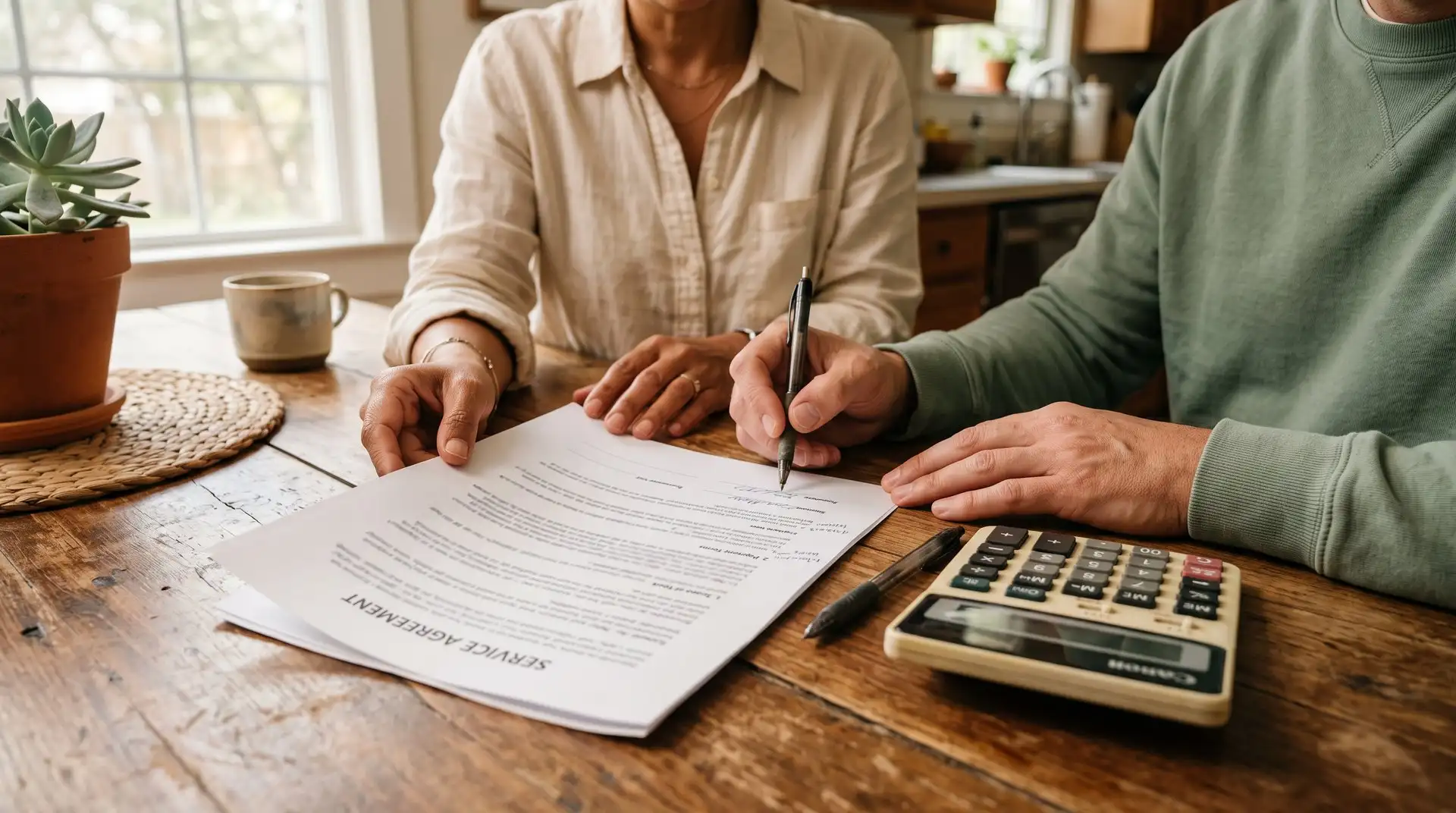
- When you are paid, and what the settlement statement itemizes.
- Whether a minimum fee applies if the sale underperforms.
Tell us about the house, and we’ll call you to go over your options, then match you with a few select companies.
Common questions
Do I pay an estate sale company anything before the sale?
Usually not. Most estate sale companies work on commission taken out of the proceeds after the sale closes. Some contracts add a minimum or other fees, so if a company asks for money upfront, ask exactly what it covers and whether it is refundable if the sale underperforms.
Is sales tax charged at a Texas estate sale?
Usually, when a company runs it. Texas exempts some occasional personal sales up to $3,000 a year, but not sales made through an auctioneer, broker or factor, and a company selling your belongings on commission is selling on your behalf. Buyers pay the tax, not the family. Ask the company how it collects and remits it.
What makes one quote higher than another?
How much is in the house, how much of it is genuinely saleable, and how much labor the job needs. A packed four-bedroom house with collectibles is a lower percentage than a sparse apartment, because the same days of work return far more.
Is the commission negotiable?
Sometimes, so it is worth asking. What moves more easily than the headline percentage is what is included: advertising, the cleanout afterwards, and what happens to unsold items are all worth settling before you sign.
Where these numbers come from
- Texas exempts occasional sales of one or two items, or personal-use items up to $3,000 a year, but not for anyone who holds or must hold a sales tax permit.: Texas Comptroller of Public Accounts, verified 2026-09-28
- The $3,000 personal-use exemption does not apply to a sale made through an auctioneer, broker or factor, other than an online auction.: Texas Comptroller Rule 3.316 (34 Tex. Admin. Code), via Cornell LII, verified 2026-09-28
- Tax Code section 151.304 defines occasional sales, including the auctioneer, broker or factor condition.: Texas Legislature, Tax Code chapter 151, verified 2026-09-28
- Estate sale liquidators take 30 to 50 percent of sales proceeds as typical, some use a sliding scale with lower rates for larger sales, and minimum sale amounts and fees are also common.: Consumers' Checkbook, verified 2026-10-10
- Most estate sale companies operate on a commission basis. One example sliding scale: $5,000 to $10,000 at 50%, $10,001 to $15,000 at 45%, $15,001 to $20,000 at 40%, $20,001 to $30,000 at 35%, over $30,000 at 30%.: Estate Pros (industry operator, secondary source), verified 2026-10-10
- The estate sale industry runs on commission, so with any luck nothing comes out of the seller's pocket, though the contract may include a minimum.: EstateSales.net (industry listing platform, secondary source), verified 2026-10-10
- Company list: Texas Comptroller sales tax permits, public record
This page last verified 2026-09-28.
Filed underHiring a company
 Texas Treasure Map